May the Fourth Be With You, Always. What Star Wars Taught Us About AI & Filmmaking

I was seven years old when I walked out of The Empire Strikes Back and felt something I didn't have words for yet. It wasn't just the story. It was the weight of it. The unresolved ending. Han Solo frozen in carbonite, and no one able to tell me what happened next.
I turned to my parents as we were walking out of the darkened theater, credits rolling in the background, the iconic imperial march music blasting through the giant speakers, stray popcorn kernels crunching under my tiny feet, and pulled on my father’s hand, begging to know- when would the next movie come out? When would we find out what happens to Han Solo? And would we get the answer to the question my little brain was most afraid of — that Darth Vader was actually Luke's father??
“Probably in about 3 years.” Was his reply.
For a moment, I stopped walking, frozen to the spot, completely stunned by the answer. It felt devastating- Three years felt like a lifetime to my seven-year-old self.
That feeling, that specific ache of loving something in film so completely that its absence is almost physical, is what I think about when I think about why AI creators are not who people assume we are.
We are not technologists who wandered into storytelling. We are people who grew up standing on that ridge with Luke, staring at two suns going down, and feeling something we couldn't name.
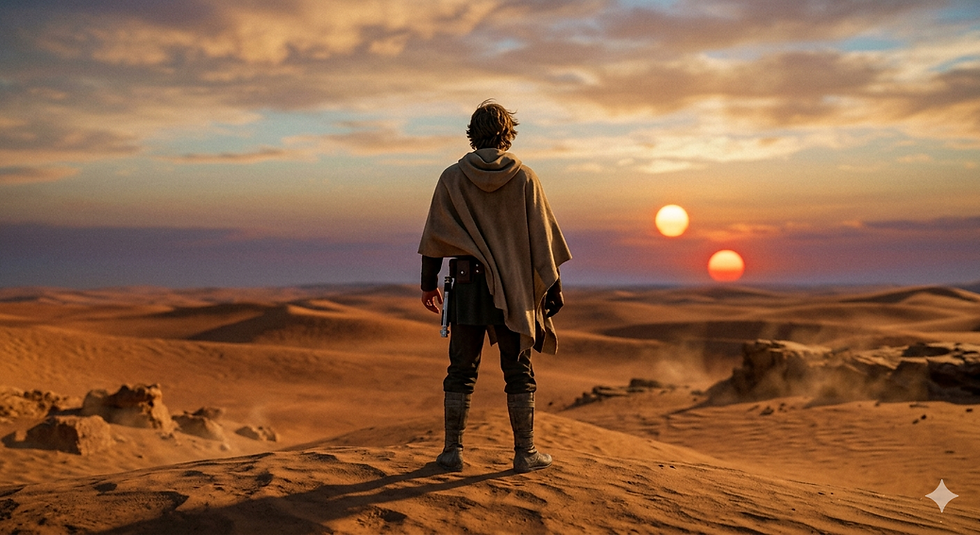
We came to AI because the tools finally arrived that could get closer to what we have been trying to make in our heads for decades. The canvas changed. The love didn't.
George Lucas understood this first. He didn't just make a movie in 1977. He built an entirely new technological infrastructure for what cinema could be, and then dared the industry to catch up. ILM wasn't a special effects house. It was a research lab wearing a production company's clothes. The tools Lucas needed didn't exist, so he invented them, then watched those inventions quietly reshape every film that came after. The technology was always in service of the feeling, and a human being with a specific obsessive vision was the one deciding what feeling mattered.
That is still exactly how this works.
Seedance and tools like it are extraordinary. They are also inert without a human creator who knows what they are reaching for. The artist is not inside the platform. The artist is the one who opens it, knowing precisely what ache they are trying to give someone else. The same way Lucas didn't build ILM to show off what was technically possible. He built it because the story required it.
We are living in that same moment right now. The question was never whether AI belongs in filmmaking. The question is who will be willing to build with it before anyone else believes it is necessary.
The canvas is new. The job is the same as it always was.
May the Fourth be with you.


Comments